The Audience Can Hear a Pause Before It Understands It
A held silence in performance redirects attention, builds expectation, and changes the line that follows. Learn how actors can shape that pause.

A held silence can change the line that follows before the audience knows why. In performance, a pause is not empty time: it gives spectators a chance to notice a breath, a glance, or a sudden refusal to speak. The actor’s task is to make that silence feel active without explaining it too soon.
1. Decide what changes during the silence
Start by asking what the character is doing while no words are spoken. They might be deciding whether to answer, trying to read another person, or discovering that the answer has changed. If nothing shifts, the pause may feel like a delay rather than a choice.
Keep the action playable and specific. “Think about the past” is hard to stage; “decide whether to tell her the name” gives the actor something to pursue. The audience does not need to identify that private action. It needs to sense that the character is occupied.
Say you are rehearsing a scene in which one character asks, “Did you open the letter?” The actor playing the other character could hold the silence while deciding whether to protect a friend. A small change in focus toward the friend, followed by a guarded answer, lets the pause carry pressure without turning it into a display.
2. Let attention move before the line does
A pause can direct the audience toward a detail already present: a hand that has stopped moving, a partner waiting for a reply, or a voice that has gone unusually still. Choose one focal cue. If the actor adds several gestures, spectators may start interpreting the performance instead of listening to the scene.
Stillness is not automatically expressive. The actor can remain physically quiet while keeping attention active, following a partner’s face or resisting the urge to look away. That inner attention gives the silence shape. It also helps the audience feel the pause as a response to another person, not as a gap inserted between lines.
Onstage, the cue should suit the room and the production’s style. A close, restrained performance may make a tiny shift legible; a larger playing space may call for a clearer change of focus. The choice is not “more movement” or “less movement,” but whether spectators can follow the change that matters.
3. How long should a performance pause last?
Should the actor count the seconds?
A fixed count can help an actor explore duration in rehearsal, but it is rarely the whole answer. The pause should last until the character’s action reaches a turn, such as giving in, withholding an answer, or deciding to speak.
How can a pause avoid feeling slow?
Give it a changing focus or objective, even if the body stays still. If the actor remains attentive to a partner and something in the decision develops, spectators have a reason to stay with the silence.
What does the audience hear during silence?
Spectators hear the room: a breath, a chair shifting, or the contrast between the last spoken word and the next one. Those sounds become more noticeable when speech stops, so the actor should allow them without treating every incidental noise as a cue.
Should every script’s pause be played the same way?
No. A pause can carry hesitation, threat, tenderness, or simple concentration, depending on the scene and the actor’s relationship with the next line. Keep the text intact, then explore how different playable intentions alter its effect.
4. Make the next line answer the silence
The line after a pause should not merely resume the conversation. It can reveal what the character chose, cover what they nearly said, or force a partner to react to the delay. The actor can make that change audible through a different pace, emphasis, or degree of certainty.
Do not assume a pause means the following line needs extra volume or dramatic weight. Sometimes the strongest contrast is a plain, almost casual delivery after an intense silence. In other scenes, a sharper attack makes clear that the character has decided to take control. Test the relationship between the silence and the line, not the line in isolation.
A useful rehearsal question is: “What can no longer be said in quite the same way after this pause?” If the answer is “nothing,” reconsider the length or the character’s action. The pause should alter the conditions of the exchange, even subtly.
5. Rehearse the silence with a partner
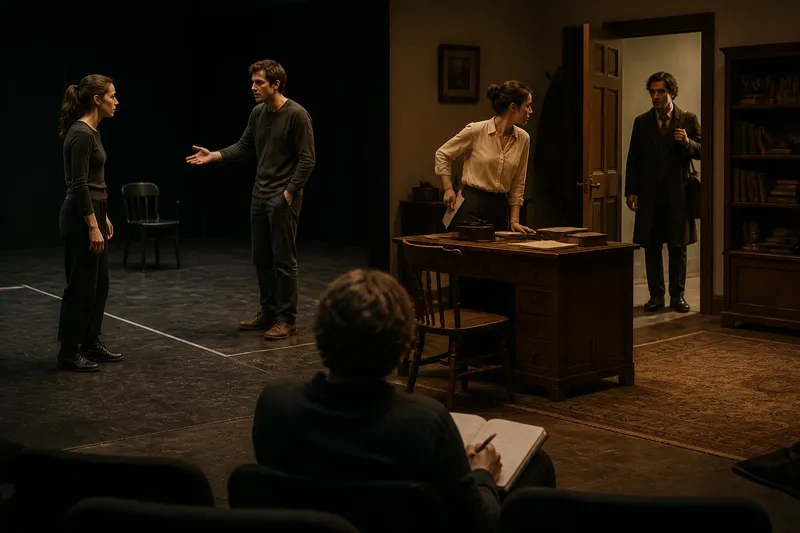
Run the moment with both actors present. The waiting character’s behavior depends on what the other person does: holds eye contact, looks away, starts to answer, or gives the silence room. A pause that works alone may become confusing if the partner’s response suggests a different event.
- Agree on the question or pressure that creates the silence.
- Choose one main focus for the actor holding it.
- Let the partner respond naturally without adding a planned signal.
- Try the next line with a different intention, such as reassurance or evasion.
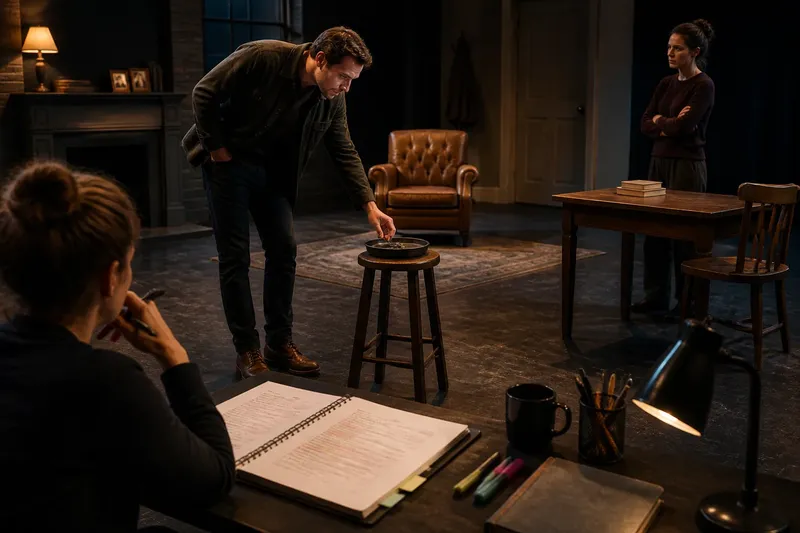
- Ask a neutral observer what changed between the silence and the line.
Keep the conversation concrete. “Did the answer sound chosen or automatic?” will help more than “Was it powerful?” The observer can describe what became noticeable without being asked to diagnose the character’s whole inner life.
6. Use silence without making a trick of it
Repeated long pauses can teach an audience to expect a dramatic effect every time speech stops. Vary the scale. A brief hesitation may be enough to change the meaning of a familiar phrase, while a longer silence earns its place when the character is genuinely unable or unwilling to proceed.
Also consider who has the power to end the silence. If one character waits while another controls when speech resumes, the pause can expose an imbalance without adding explanatory dialogue. If both characters share the silence, it may suggest recognition, discomfort, or a common decision. Let the scene’s relationship determine which reading the performance supports.
For a held silence in performance, the practical test is whether attention, expectation, or the next line changes. Keep the pause when spectators can follow that shift; shorten it when it only asks them to wait. The strongest silence leaves the audience listening differently when the actor finally speaks.